Orthodontics (Braces)
The benefits that braces produce, such as restoring proper function of the teeth and a winning smile, come with some risk. These potential problems include gum disease and white spots of the teeth. 1 - 6 These negative results can be due to the challenges of cleaning around the brackets. While they are common problems, they can be prevented with care and attention to the teeth.
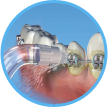
There are a number of steps involved in caring for teeth with braces. The first is removing plaque and is primarily done with a toothbrush. A manual toothbrush works well if it is properly used, but individuals with brackets and other fixed orthodontic devices may find it easier to use a power or sonic toothbrush. But even a sonic toothbrush can't remove all the plaque because there remain some areas that can't be reached, so other tools may be needed. Flossing is difficult without braces and increases in difficulty when working around the brackets. Although, with practice, it can be done, an easier and more effective way to clean between the teeth and under the gums is a Waterpik® dental water jet oral irrigator with the new orthodontic tip. The tip is designed with a tapered brush on the end that helps remove the plaque that sticks to the brackets and between the teeth while also flushing the bacteria and food debris from around teeth and under the gums. In a recent study the Waterpik® dental water jet oral irrigator removed three times more plaque and reduced bleeding better than brushing and flossing in 11 - 17 year olds with fixed orthodontic appliances. And they liked it so much that 92% said they would continue to use the Waterpik dental water jet "every day" or "frequently" when the study was completed. 7
It's so important to have regular dental check ups during orthodontic treatment. Using fluoridated toothpaste or adding a fluoride rinse to you routine can also help prevent white spots (decalcification) and decay.
1 - Chang HS, Walsh LJ, Freer TJ. Enamel demineralisation during orthodontic treatment. Aetiology and prevention. Aus Dent J 1997;42:322-327.
2 - Gorelick L, Geiger AM, Gwinnett AJ. Incidence of white spot formation after bonding and banding. Am J Orthod 1982;81:93-98.
3 - O'Reilly M, Featherstone J. Demineralisation and remineralisation around orthodontic appliances – an invivo study. Am J Orhod Dento Orhop 1987;92:33-40.
4 - Oggard B, Rolla G, Arends J. Orthodontic appliances and enamel demineralisation. Part 1. Lesion development. Am J Orthod Dento Orthop 1988;93:29-37.
5 - Naranjo AA et al. Changes in the subgingival microbiota and periodontal parameters before and 3 months after bracket placement. Am J Orthod Dentofacial Orthop 2006;130:e17-e22.
6 - Atack NE, Sandy JR and Addy M. Periodontal and microbiological changes associated with placement of orthodontic appliances. A review. J Periodontol 1996;67:78-85.
7 - Sharma N et al. New study
Crowns, Bridges, Veneers
Restoring a tooth that is decayed, fractured or lost due to gum disease or an accident is necessary to maintain functionality. The dental materials used today are designed to withstand being in the mouth while also remaining compatible with gum tissue. There are a number of ways to restore a tooth including amalgams (silver, fillings) composites (tooth colored), crowns, bridges, veneers and implants. Crowns cover most or all of the tooth, and a bridge is attached to two or more crowns to fill the space where a tooth is missing. A veneer is a thin tooth colored piece that is cemented onto the front of a tooth. They are used to improve the look of a tooth such as stained or badly shaped teeth or close small spaces or gaps between teeth. A dental implant is a metal post that is a substitution for the root of a tooth. An implant may be used to replace a single missing tooth, several teeth or in some cases, all of your teeth.
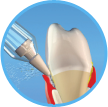
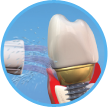
Some dental work such as a bridge or implants can be very difficult to clean. The Waterpik® Dental Water Jet oral irrigator is designed to clean around all types of dental work and restorations. The pulsating action helps clean under the bridge and around crowns where bacteria and food can get trapped.
Implants
A dental implant is a titanium post that duplicates the root of a tooth. An implant may be used to replace a single missing tooth, several teeth or in some cases, all of your teeth. The open space is filled with a single tooth or several teeth that are attached and look like the rest of your teeth. Implants may also replace all of your teeth by being the support that a full denture is attached to.
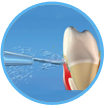
Dental implants need to be cleaned and cared for just like your natural teeth. Plaque and bacteria can form around an implant causing inflammation known as peri-implantitis. Daily cleaning of all the surfaces above and below the gum line is very important. A manual, power or sonic toothbrush with soft bristles can be used to clean above the gum line. The Waterpik® dental water jet oral irrigator with the Pik Pocket ® subgingival irrigation tip is ideal for cleaning below the gum line. The soft tip of the Pik Pocket® tip is placed slightly under the gum line and the gentle pulsations of water of antimicrobial agent flush out the bacteria and food debris.
Gingivitis
The majority of adults and adolesence have or have had some form of gum disease. Gum disease can be separated in two categories: gingivitis and periodontitis. The main cause of periodontitis is plaque, which is a sticky film of bacteria that continuously forms on the teeth and under the gum line causing dental plaque. The cause of gingivitis is inflammation of the gum tissue and is reversible. The signs of gingivitis are red or swollen gums that may be tender to the touch or gums that bleed easily when brushing or using other dental products.
By following a comprehensive home care routine, gingivitis can be prevented or reversed. Adding a Waterpik® dental water jet oral irrigator to your daily routine is one of the fastest and most effective ways available to healthier gums. Invented by a dentist, Waterpik® dental water jets have been clinically shown to have the best combination of pulsation and pressure to clean where brushing and flossing can't reach. The most destructive bacteria hide deep and the Waterpik® dental water jet can reach between the teeth and below the gumline to remove the bad bacteria and help keep the gums healthy.
Diabetes
Are you one of the growing number of people affected by diabetes? Type 2 diabetes becomes more common as people age, afflicting one in five people aged 60 and older. Diabetes can affect many parts of the body, including your mouth. Studies show that having diabetes increases your chances of having gum disease and that people with diabetes may get gum disease earlier and it may be more severe. If you have diabetes or are a caregiver for someone who does, it's important to have regular dental exams and cleanings and take good care of your teeth at home. The Waterpik® dental water jet oral irrigator is one of few home care products tested on people with diabetes. It's ideal for diabetes oral health and to add to brushing because it has been found to improve the gums of people with diabetes by significantly reducing plaque, bleeding, and gingivitis better than brushing and flossing alone.
Pregnancy
Pregnancy creates many changes in a woman's body including in the mouth. It is always important to keep your teeth clean but especially at this time. During pregnancy, hormonal fluctuations can impact your response to the bacteria in dental plaque, increasing the risk and severity of gum disease. This can be prevented by using a Waterpik® dental water jet oral irrigator daily. It's one of the fastest and most effective things you can do for yourself to keep your teeth clean and your gums healthy.
Recently researchers have studied the impact of gum disease on the mother on the unborn child. Some studies have shown a link in the number of premature births or low birth weight babies but more research is needed at this time to establish a cause and effect relationship. Still, this relationship emphasizes the importance of good oral hygiene. Developing good dental hygiene will help you during pregnancy and establish positive habits after your child is born to prevent oral disease in infancy, childhood, adolescence and into adulthood.
Periodontal (Gum) Disease
Periodontal (gum) disease can be separated into two primary categories; gingivitis and periodontitis. Periodontal disease can affect one or more teeth. The primary cause of periodontal disease is plaque. Plaque is a sticky film of gram-negative bacteria that continuously forms on the teeth and under the gum line. Gingivitis is inflammation of the gum tissue and is reversible. The signs and symptoms of gingivitis include red or swollen gums that may be tender to the touch or gums that bleed easily when brushing or using other dental health products.
Gum disease is inflammation of the gum tissue and damage to the structures that support the teeth, including the bone. Untreated gum disease may progress to periodontitis and eventual tooth loss. This happens because bacteria release toxins, especially below the gumline, that irritate the gum tissue and cause inflammation. The gums will eventually break down and separate from the teeth causing a deep space called a pocket. These pockets are very difficult to clean, which permits bacteria to grow and multiply. In addition to the signs and symptoms of gingivitis, you also may notice a bad taste in your mouth or persistent bad breath, gums that pull away from the teeth, or loose teeth. Bacteria in plaque are the main cause of gingivitis and periodontitis but other things contribute to your risk and severity - such as smoking, diabetes, or pregnancy. If you smoke, have diabetes or are pregnant, make an appointment with your dentist for a check up.
Gum diseases can be prevented by reducing your risk and practicing good dental hygiene. Adding a Waterpik® dental water jet oral irrigator to your daily oral care is one of the fastest and most effective ways to have healthier gums. Invented by a dentist, Waterpik® dental water jets have been clinically shown to have the best combination of pulsation and pressure to clean where brushing and flossing can't reach. The most destructive bacteria hide deep and the Waterpik® dental water jet can reach between the teeth and below the gumline to remove the bad bacteria and help keep the gums healthy.
Periodontal Pockets
Moderate periodontal disease affects the majority of people at some time in their lives. About 80% of adults have some bone loss, and between 40%-50% have bleeding gums. If you've ever been told that you have a periodontal pocket or “pocketing”, you've experienced this. Treatment requirements vary depending on the severity or depth of the pocket or pocket you have. Only your dentist can tell you what your specific treatment needs are. It is not uncommon for people who have been treated for periodontal disease to have some pockets remaining. The biggest problem this creates is in daily cleaning. Traditional methods, such as brushing, flossing or rinsing are limited to how far they can reach into a pocket. To improve your cleaning of a pocket, use a Waterpik® dental water jet with a tip called the Pik Pocket® Subgingival Tip. This tip is easy to use and gently cleans the pocket up to 90% of the depth of the pocket.
Smoking
Smoking is a major risk factor for developing gum disease. People who smoke are four times more likely to have gum disease than non-smokers. The heavier you smoke, the more likely you are to have a more severe case of gum disease. People who continue to smoke while being treated for periodontitis, will have only 50%-75% of the healing response of non-smokers. If you smoke, the most important thing you can do for yourself and your family is to stop. Quitting smoking cannot reverse the past damage done to your teeth, but the disease process slows down significantly and your response to treatment is similar to someone who has never smoked. If you have periodontal disease due to current or past smoking, then you need to consider adding a Waterpik® dental water jet oral irrigator to your daily routine. Studies have shown that people who have been previously treated for periodontal disease who added a Waterpik® dental water jet to their daily routine had greater reductions in bleeding and gingivitis than those who did not.
Bad Breath
Bad breath is not just embarrassing socially, but it may also be a sign of other conditions including gum disease. Bacteria that cause gum disease live below the gumline and can produce a volatile sulfur compound, which is an agent often responsible for bad breath. These bacteria also cause inflammation, but because it's below the gumline it can't be seen and is often not felt. The inflammation may make bad breath worse. If you suffer from bad breath, the first step is to see your dental professional. They may recommend that you use a dental water jet (also known as an oral irrigator). The Waterpik® dental water jet has been shown to disrupt bacteria that live deep beneath the gumline to reduce the bleeding caused from periodontal inflammation.
Children & Adolescent Health
Gum disease is common in children and adolescents. It's generally caused by poor dental care and plaque removal for reasons such as crowded teeth, braces, or coordination that is not fully developed. This can be an issue at any age, particularly with boys. Since it's easier to use than floss, the Waterpik® dental water jet may be especially beneficial for children. The Waterpik® dental water jet can reach areas that children with braces or crowded teeth often miss with tooth brushing alone. Having braces often means swollen and tender gums and tissue. The massaging action of the dental water jets can be a gentle yet effective way of reducing this discomfort. Newer, state-of-the-art models feature tips such as the new Orthodontic Tip, designed to simultaneously brush and rinse hard to reach areas around braces and other dental work.